
Otto Laske’s Insight into the Poetry of Nadine Boughton
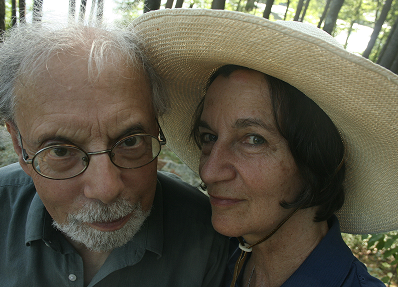
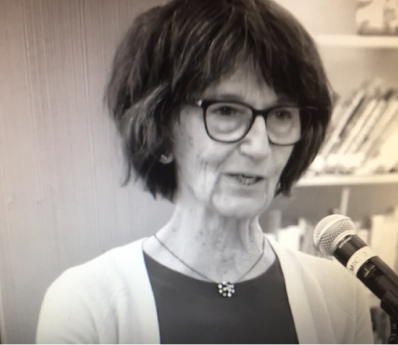
Nadine Boughton was a humanist and a multi-talented artist, recognized for her work as a photographer and collagist, but also a poet and writer of depth. Despite her renown in visual arts, her literary achievements, especially in poetry, are only now coming into wider recognition. Otto Laske, as her executor and a fellow poet, emphasizes the breadth of her artistic legacy and his intent to further reveal her as a significant literary figure.
Boughton’s poetry is deeply introspective, shaped by personal experiences and societal contexts. Her work reflects a profound engagement with the “human condition” as it was molded by mid-20th-century American culture. Her poetry explores the impact of social and cultural conventions of the 1940s and 1950s, as well as her complex relationship with her parents—her father’s artistic example and emotional distance, and her mother’s influence on her social sensitivity and symbolic imagination.
A central theme in Boughton’s poetry is the “archetype of the feminine,” influenced by Cherokee wisdom, Jungian psychology, Joseph Campbell’s work, and the iconography of The Feminine. Her immersion in the “Goddess culture” and engagement with American Buddhism further deepened her spiritual perspective. These influences manifest in her poetry as explorations of creativity, embodiment, descent, and spiritual transformation.
Nadine’s artistic evolution is notable: she began integrating images and text in her forties, transitioned from a conventional life to creative pursuits, and drew from her experiences in psychotherapy and expressive arts. Her journey included a pivotal solo trip to the New Mexico desert, which inspired profound communion with nature and lifelong self-reflection, as evidenced in poems like “Dance of Molecules.”
Boughton’s poetry is grounded in the wisdom of the body and somatic experience. Her thesis on the creative process and her teaching philosophy focused on the human voice as a bodily bridge between inner self-searching and public expression. She encouraged “embodied voice work,” fostering presence and authenticity—a perspective evident in poems such as “My Body is a Lake” in Lap of Night, which blends natural imagery with bodily experience.
Boughton’s poetry is marked by masterful imagery, concise diction, and musical language. She innovatively links word and image, drawing from her visual arts background. Her poetic voice is both introspective and outward-looking, exploring the interplay between light and darkness, introspection and revelation, and stressing the rewards of one’s descent into stillness.
Otto Laske positions Boughton as a master poet who, in thirty years, achieved a synthesis of poetic imagery, innovative forms, and the union of word and image. Her poetry serves as a testimony to her lifelong search for authenticity, her commitment to embodied creativity, and her role as a representative of second-generation American Buddhism and feminine spirituality.
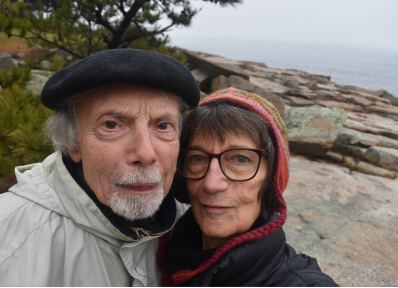
This site is devoted to the legacy writings of Nadine Boughton and Otto Laske: two independent creators, joined in life and marriage, whose bodies of work deserve to be read in their own right.
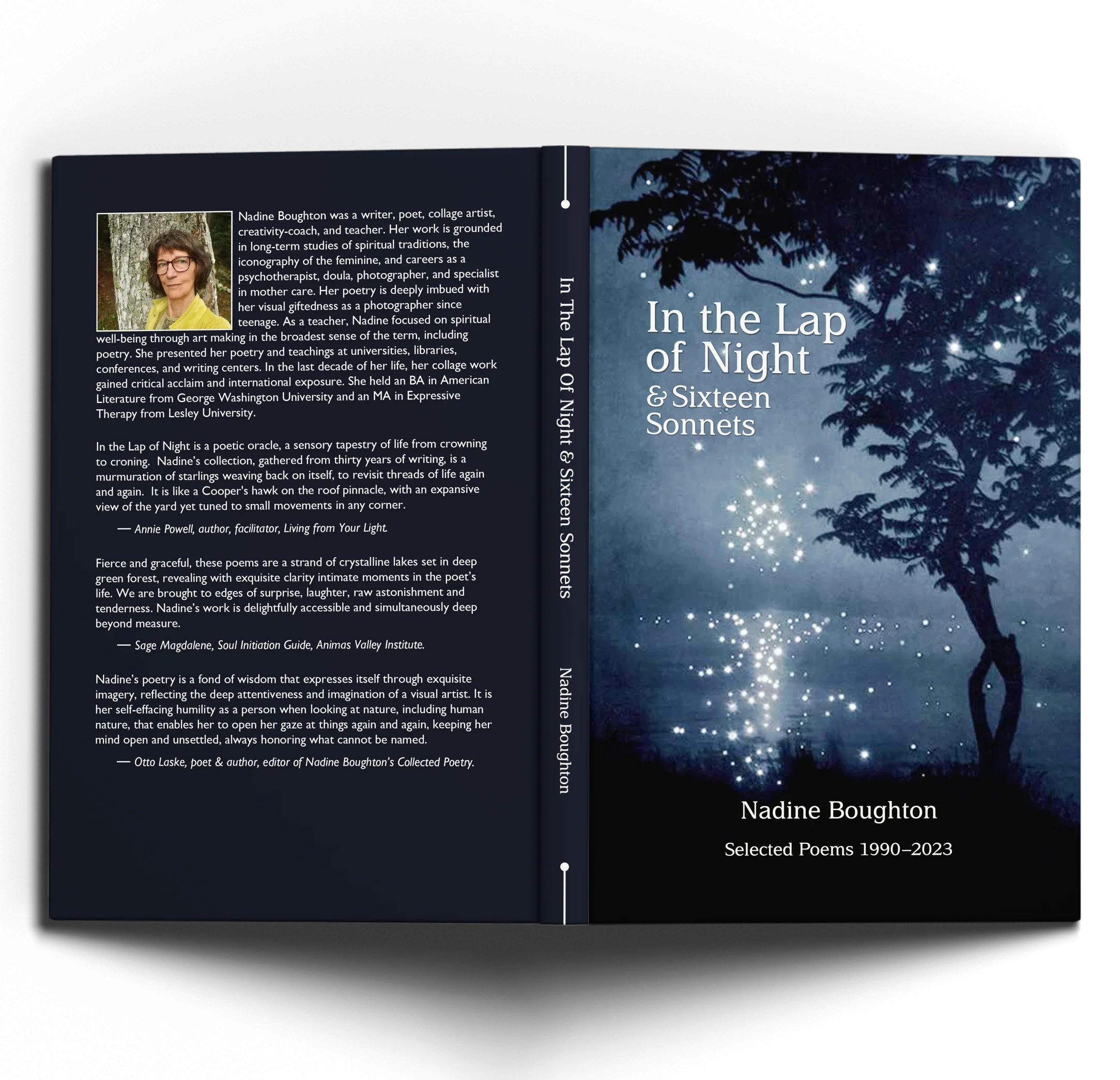
So far, the site has introduced readers to Nadine Boughton’s poetry (In the Lap of Night and Sixteen Sonnets) and a book on her as an all-round artist entitled Finding Wholeness Through Art Making. This new presentation turns to Otto Laske’s distinct poetic world: a lyric voice shaped by displacement, memory, and historical self-questioning, searching for song across languages, lost homes, and war’s aftermath.
Songs of Exile and Return is a composed book in two movements. Its two parts follow the same fourfold sequence — Departure, At the Threshold, Deep Below, and Return — so that the second movement re-enters, tests, and transforms the first. In the first part, the arc unfolds through trust in the lyrical voice. Departure opens onto childhood, homeland, love, and spiritual origin; the threshold is crossed through memory and longing; descent turns inward; and return appears as the hope that song can gather what distance and time have scattered.
The second part, After Rupture, returns to the same arc under the pressure of history. It does not simply darken the first part’s world; it tests the first part’s trust in the lyrical voice. War, forced departure from home, and the loss of belonging unsettle the very ground from which song speaks. Longing becomes ordeal, remembrance becomes exposure, and prayer becomes a struggle to find words. The lyrical voice can no longer rely on memory alone; it must find a way to speak from fracture.
The two movements stand in sharp contrast, but they do so as dialogue partners. The first movement gathers childhood, homeland, love, and spiritual longing into a lyrical arc sustained by trust in song’s power to hold experience together. The second movement repeats the same four-step sequence after that trust has been shaken: departure becomes rupture, threshold becomes exposure, descent becomes linguistic and psychic dislocation, and return can no longer mean recovery of what was lost but only the finding of a changed voice. Through this transformation, the two parts remain bound to the same underlying movement of departure, threshold, descent, and return, and both are drawn toward the same desire: that song persist — first as remembered trust, then as a voice rebuilt after rupture.
What is singular in Songs is the way its apparent autobiographical materials—mother tongue, emigration, Silesian childhood, postwar silence, love, spiritual longing, and artistic vocation—are continually transformed into questions of form. The book does not merely remember displacement; it lets displacement alter cadence, image, syntax, and address, so that exile becomes audible as a pressure inside language itself.
Together, the two parts carry the reader from remembered lyric wholeness into a changed music: chastened, fragmentary, spiritually charged, and alive to the burden of singing after catastrophe. Songs is at once personal testimony and poetics of survival: a work written chiefly in English, the principal medium of utterance, while carrying beneath it the buried music of German memory. Here the act of singing becomes inseparable from the work of remaking a self after rupture. Song survives not by returning unchanged, but by passing through rupture and finding a new way to speak.
Readers of poetry, memoir, and spiritual writing are invited to enter Songs of Exile and Return as the opening movement in a fuller presentation of Otto Laske’s poetry. This composed book prepares the way for the work that follows, where exile and return give way to grief transformed into a new form of attention.